


Reformer Pilates Equipment Maintenance Guide for Commercial Studios
Reformer machines used in a commercial studio encounter an entirely new set of pressures that are not seen at home. The springs age more rapidly, wheels collect dirt from many different users, and the upholstery is exposed to a degree of stress that would be completely foreign in personal machines. Failure to do proper maintenance results in a bumpy ride, snapping springs, and faster ageing of parts that are costly to replace. This manual includes all the information needed by a UK studio owner, including cleaning, safety, mechanical maintenance, spring replacement, replacement of ropes and wheels, how to unstick a carriage, record keeping, and when to call in the professionals as part of reformerpilates machine maintenance for reformer pilates equipment.
- Sale price
- £589.99
- Regular price
-
£989.99 - Regular price
- £589.99
- Unit price
- per
- Sale price
- £699.00
- Regular price
-
- Regular price
- £699.00
- Unit price
- per

- Sale price
- £1,100.00
- Regular price
-
- Regular price
- £1,100.00
- Unit price
- per
Commercial Studios Are a Different Category Entirely
The requirements for reformers within a personal gym are quite different from those used within a commercial studio. It is within this difference that most maintenance issues start to arise silently. Springs that might last years under occasional personal use can show structural fatigue within months when cycled repeatedly across back-to-back class formats. Wheels accumulate hair, grit, and compressed debris far faster than manufacturers' general guidance anticipates; upholstery seams absorb sweat from dozens of clients rather than one.
It must be noted that this is not merely a matter of longevity of the equipment. In terms of Provision and Use of Work Equipment Regulations 1998 (PUWER), there is a statutory requirement for business organisations to ensure that all equipment, including fitness equipment, is "safe for use, maintained in a safe condition and inspected to ensure that it is safely installed." That is statute, not advisory guidance. Letting a known fault run until the next convenient service window is not a defensible position under PUWER, making pilates equipment safety inspection an essential responsibility.
The volume of use in a commercial studio is the variable that changes everything. Build maintenance around it accordingly, following a structured pilates machine servicing schedule supported by commercial pilates machine maintenance practices.
After Every Class: The Checks That Cannot Wait
Post-session care is the least glamorous part of studio operations. It is also the part that prevents a minor issue from becoming a cancelled class.
Upholstery and Surface Cleaning
Apply the spray cleaner to the cloth and not on the exercise machine directly. The liquid will get into the seam area of the vinyl material easily, get into the foam underneath and start breaking down the foam and the wood underneath even before it is noticeable on the surface. Disinfectant or the appropriate vinyl cleaner should be used after each use to wipe the carriage bed, headrest, shoulder rests and footbar padding, forming part of preventative maintenance for pilates equipment.
Strap and Handle Hygiene
All loops, handles, and fabric straps need wiping between users. Beyond the obvious hygiene requirement, this also gives instructors thirty seconds of contact time with components they would otherwise never look at closely. A frayed rope that can be observed when doing a swift wipe-down is seen to unravel before becoming a broken rope in the middle of the exercise.
Do a quick visual inspection before securing the equipment: see if there are any sounds coming from the carriage that were not made by it yesterday; ensure that all springs are well set in place and that nothing is loose that was not loose previously. This simple routine also reflects how to maintain a pilates reformer.
The Weekly Deep Clean and Safety Audit
One missed week rarely causes lasting damage. A pattern of skipped weekly checks almost always does.
Tracks, Wheels, and the Carriage System
Release all the springs and position the carriage at one end of the frame. Dust the aluminium or wooden tracks using a dry microfiber cloth to remove the hair, dead skin cells, and dust that get deposited on the tracks in a manner invisible to the naked eye during class time. Place a slightly wet cloth on the wheel and slide the carriage from one side to another in order to collect dust from the surface of the wheel without getting the tracks wet. Always keep the tracks completely dry; adding oil to the track will lead to accumulation of dirt. This level of care is recommended during pilates equipment servicing UK.
Springs: What to Look for Before the Class Begins
Visually inspect every spring. Look for gaps between coils when the spring is at rest, kinks in the coil body, corrosion on the metal surface, and deformed or bent hooks at either end. A spring that does not close fully when unloaded has lost structural integrity; it should come off the machine immediately, not at the end of the week's schedule, particularly on a commercial pilates reformer used throughout the day.
Rope and Hardware Checks
Inspect the full rope length for fraying, stiffening, or any flattening of the fibres. Confirm the rope adjustment system locks cleanly into position. Use an Allen key or hex key set to check that pulley wheel bolts, riser attachments, and shoulder rest pins are fully tightened; repeated carriage movement vibrates fasteners loose over time, and a loose pulley bolt produces the kind of lateral instability that wears a wheel unevenly within weeks on a pilates reformer for daily studio use.
| Weekly Check | What to Look For | Action if Found |
| Tracks | Hair, dust, grit accumulation | Wipe dry with microfibre cloth |
| Wheels | Resistance, grinding, lateral play | Deep clean; tighten or replace |
| Springs | Gaps, kinks, corrosion, bent hooks | Remove immediately; do not use |
| Ropes | Fraying, stiffening, uneven stretch | Replace; do not delay |
| Hardware | Loose bolts, pins, pulley attachments | Tighten with correct Allen key size |
Monthly Tune-Up: The Parts Daily Checks Miss
Monthly maintenance targets the interior components that surface-level inspection cannot reach.

Lubricating the Right Parts (and Never the Wrong Ones)
The lubrication should be applied to spring attachment clips, foot bar adjusting connections, and pulley axle ends as these are the areas where there is friction and causes squeaking and stiffening when dry. Never apply lubricant to the carriage tracks or the outer surface of wheels. Oil on a track surface collects dust from the studio air, binds with it, and forms a paste that abrades both the wheel tread and the track surface simultaneously. The rule is simple: lubricate internal bearing surfaces and joints, keep external rolling surfaces entirely dry, following reformerpilates machine maintenance guidance where appropriate.
Frame Stability and Structural Integrity
Verify the primary structural bolts connecting frame elements have not vibrated loose over weeks of class use. For machines with removable legs or tower attachments, each connection point needs a manual check. Any frame movement, cracking, or instability discovered during this check warrants professional assessment before the machine returns to service. Inspect the upholstery for small tears; commercial use expands minor splits into larger splits quickly, and compromised padding carries hygiene and comfort implications that clients notice immediately. This is also an ideal time to complete a pilates equipment maintenance checklist.
Quarterly Rotation and Annual Replacement Schedules
Preventive replacement is consistently cheaper than emergency repair. A broken spring mid-session carries liability implications that a planned replacement cycle never does.
Spring Life in a Commercial Environment
Rotate springs of the same resistance level quarterly across all machines, ensuring wear distributes evenly rather than concentrating on the most-used hooks. In any large commercial studio, the springs have to be changed every 24 months or 3,000 hours of studio operation, whichever comes first. Operating with springs that exceed their lifespan is not economical; it is risky business, even with annual pilates equipment servicing.
When to Replace Ropes, Wheels, and Straps?
Do not wait for visible failure before replacing ropes. Surface fraying consistently precedes internal fibre separation; by the time a rope looks significantly worn, it is already past the replacement point. Wheels with flat spots, surface cracks, or persistent noise should be swapped before they damage the aluminium tracks; track damage is a far more expensive repair than a set of replacement wheels. When necessary, replace pilates reformer parts promptly rather than extending their lifespan beyond safe limits.
| Component | Replacement Trigger | Commercial Frequency |
| Springs | Coil gaps, corrosion, deformed hooks; or time/usage threshold | Every 24 months or 3,000 studio hours |
| Ropes | Any fraying, stiffening, or fibre separation | As soon as degradation appears |
| Wheels | Flat spots, cracks, persistent grinding noise | Before track surface is damaged |
| Straps and handles | Loose stitching, weakened material, visible wear | On observation; do not delay |
| Upholstery | Tears, seam separation, hygiene compromise | Promptly; small tears become large ones |
Fixing a Sticky or Noisy Carriage
A catching carriage is not a minor inconvenience; it is a signal the machine needs to come offline before the next session.
The machine must be shut down right away, and a warning label must be put up on the machine. All the springs and ropes should be disconnected, the end stoppers should be removed, and the carriage should be lifted from the frame. Use a torch to locate hair or threads wrapped around the wheel axles; these are pulled clear with tweezers. Utilise a 5/32" Allen key to loosen the jammed wheel, then clean the metal block, the bolt head, and the wheel face from old grease and packed grime. A single drop of mineral oil or a small amount of white lithium grease should be placed on the inner bearing, while the outer wheel face, which touches the rail, must be completely free of any lubricant. The wheel must be tightened until it locks up without any sideways movement and tested for its full travel through the frame. Where issues persist, a pilates reformer repair service or pilates equipment repairs may be required.
Maintenance Logs: Your Legal Paper Trail
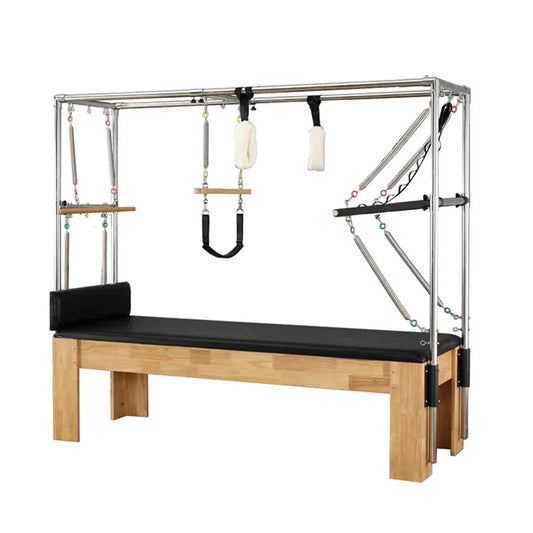
Documentation is not admin overhead. Under PUWER, operators are required to maintain inspection records; and most commercial liability insurance providers require evidence of systematic maintenance before processing claims involving equipment failure. All inspections, cleanings, repairs, and replacements are to be recorded on a machine-by-machine basis with the date, staff member’s name, and what was done. In the case of a studio having more than one reformer, it is preferable to use an online logbook rather than a paper notebook in one place, especially when servicing commercial reformer machines or maintaining a pilates cadillac reformer.
When Should You Get Help from a Pro?
Getting your commercial studio equipment serviced annually is common practice in the UK, but you should look at this as the bare minimum. Twice-annual services will serve your studio well if you’re conducting eight or more sessions on each machine daily; the wear and tear on the inner bearings and misalignment that occurs will be too subtle for your team to spot. A qualified pilates machine technician UK can also assist with pilates reformer servicing UK and broader commercial fitness equipment servicing requirements.
In addition, a professional will pick up on any manufacturer recalls and problems with your setup and how the load affects its performance. The records kept by professionals have much more influence with insurance providers when you make claims, especially when they form part of reformerpilates machine maintenance records.
Commercial reformers available from Reformer Pilates UK come in different types suitable for rigorous studio use, complete with a 12-month guarantee and speedy mainland shipping. Choosing the right equipment also benefits from a reformer pilates setup guide before installation and ongoing use.
Frequently Asked Questions
How Often Are Springs Replaced In Commercial Reformer Machines In The UK?
How Often Are Springs Replaced In Commercial Reformer Machines In The UK?
Every two years or every 3,000 hours of operation, whichever comes earlier. Rotate the springs every three months to ensure uniform wear of the springs.
Is It Compulsory For Commercial Studios To Service Their Work Equipment In The UK?
Is It Compulsory For Commercial Studios To Service Their Work Equipment In The UK?
Yes. As per the Provision and Use of Work Equipment Regulations 1998 (PUWER), it is an obligation for commercial studios to keep their work equipment in safe condition and subject to regular inspection.
Can Lubricant Be Added To The Reformer Carriage Track?
Can Lubricant Be Added To The Reformer Carriage Track?
No. Oil applied to the track attracts dust and forms an abrasive paste which damages the wheels.
What Action Should Be Taken When The Carriages Begin To Squeak/Catch?
What Action Should Be Taken When The Carriages Begin To Squeak/Catch?
The machine should be taken out of operation immediately. Remove hair from the axles, unbolt the affected wheel using the 5/32" Allen key, lubricate the bearing only, and then test before resuming use.
What Records Are Necessary For A UK Commercial Studio?
What Records Are Necessary For A UK Commercial Studio?
Keep a record of all inspections, maintenance actions, and replacements done on each machine. The dates, names of staff doing the work, and nature of actions must all be recorded.

Recent Posts


- Sale price
- £589.99
- Regular price
-
£989.99 - Regular price
- £589.99
- Unit price
- per
- Sale price
- £699.00
- Regular price
-
- Regular price
- £699.00
- Unit price
- per
- Sale price
- £525.00
- Regular price
-
- Regular price
- £525.00
- Unit price
- per


