


Pilates Combo Chair vs Wunda Chair: What’s the Difference and Which Should You Choose?
Perhaps you will assume a Pilates chair to be just a Pilates chair. Such an assumption may result in owning the wrong machine in your home or studio. Pilates combo chair vs Wunda chair appear quite similar but a single modification in their design can make everything different. And it is here where things get complicated – the more flexible machine is not necessarily the better choice for you. There are so many variables at play here – from your experience and available space to your style of training and people using it. Thus, before purchasing one of these two chairs, learn about their hidden pedal differences.
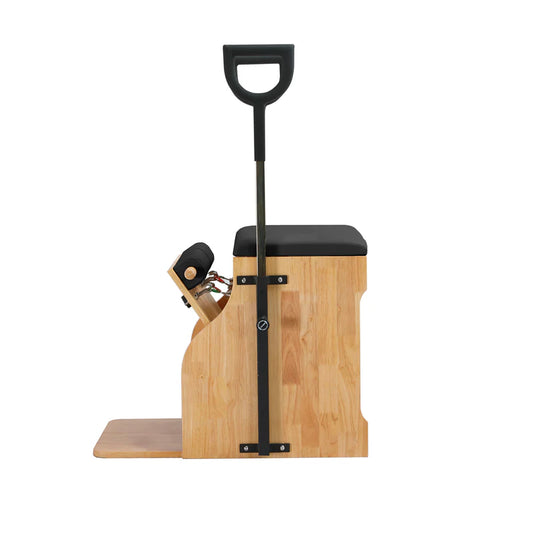
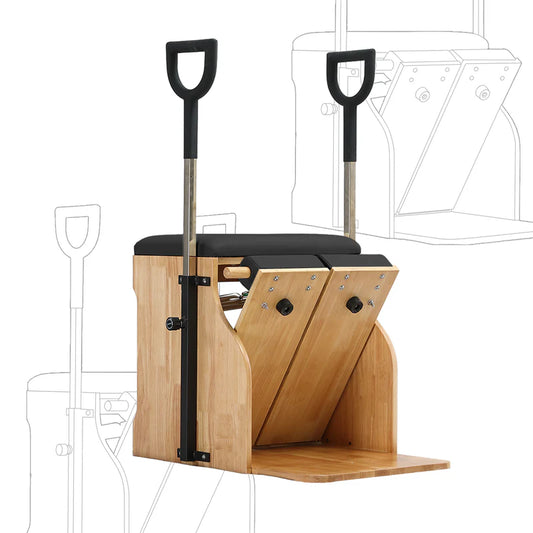
- Sale price
- £649.00
- Regular price
-
- Regular price
- £649.00
- Unit price
- per
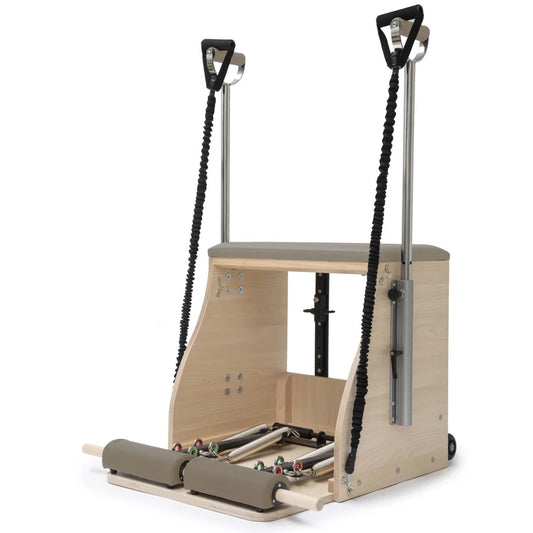
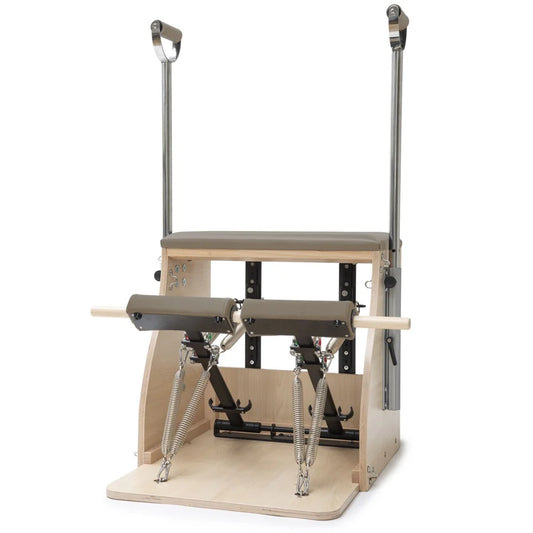
- Sale price
- £639.99
- Regular price
-
- Regular price
- £639.99
- Unit price
- per
- Sale price
- £549.99
- Regular price
-
- Regular price
- £549.99
- Unit price
- per
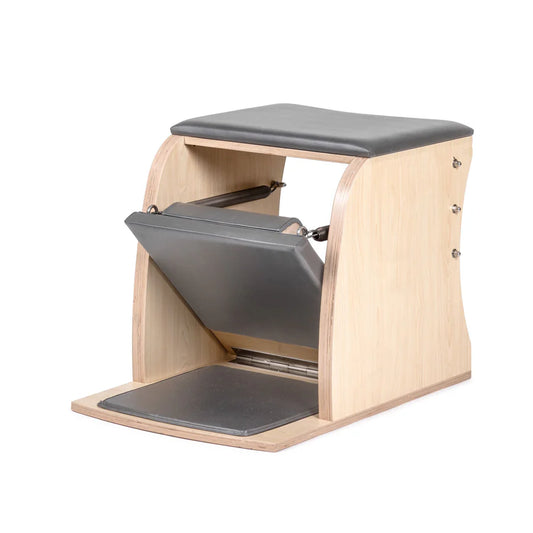
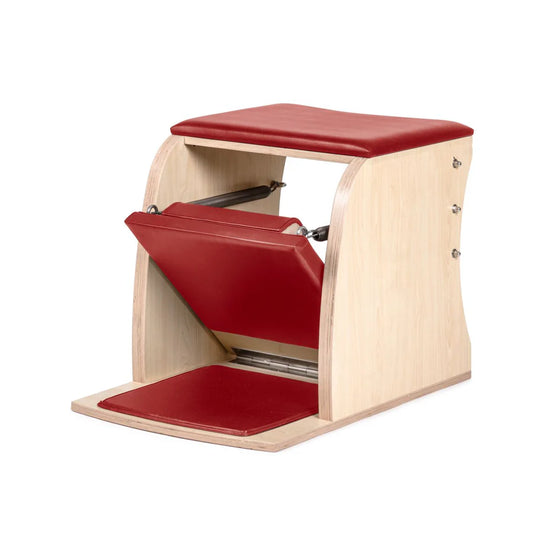
What Is a Pilates Wunda Chair?
The first-ever Wunda Chair created by Joseph Pilates was back in the 1940s under one condition only: it should serve both as living room furniture. In their small apartment in New York, this condition forced them to simplify the chair in its entirety. They created an upholstered seat, a solid pedal, and springs underneath it.
What makes the Pilates Wunda Chair a tough exercise machine is the things that it doesn't have. It has no handles to give you some external support if your side is weaker. It has just one pedal that exerts pressure on both sides of your body at once, exposing any imbalance right away. The chair can be adjusted in many ways thanks to the spring attachments.
What a Pilates Chair Is Used For?
The purpose for which the Pilates chair is used is much more than just developing core strength. From a single piece of equipment, the practitioner works on core control and spinal articulation, hip flexor and hip stability, shoulder and scapula strength, balance and proprioception, leg strength from the quads to calves, and whole-body coordination through seated, standing, prone and supine postures.
What Is a Pilates Combo Chair?
The Combo Chair did not arrive as a rival to the Wunda. It grew directly from it, keeping the same compact frame and spring logic while making one structural change that reshaped the entire training conversation: the pedal splits in two.
The Combo uses a split pedal Pilates chair design where each half moves independently. A removable wooden dowel slots between them to restore single-pedal operation for traditional exercises, giving the Combo two modes in one frame. Four springs replace the Wunda's two, with two per pedal half, producing a resistance range wide enough for post-surgery rehabilitation on the lightest setting and serious strength work on the heaviest.
Pilates Combo Chair vs Wunda Chair: The Key Differences at a Glance
The Wunda Chair vs Combo Chair comparison is less about which chair is superior and more about which movement philosophy each one commits to. The table below lays out the structural facts.
| Feature | Wunda Chair | Combo Chair |
| Pedal Design | Single solid pedal | Split pedal, converts to single via dowel |
| Spring Configuration | Typically 2 springs, multiple positions | 4 springs (2 per pedal half), wider resistance range |
| Handles | Usually sold separately | Built-in, adjustable, multi-position |
| Rotational and Reciprocal Work | Limited | Extensive via independent pedal movement |
| Transport Wheels | Not standard | Included on most models |
| Weight and Footprint | Lighter, narrower base | Heavier, slightly wider base |
| Best Suited To | Classical Pilates, compact home spaces | Versatile training, studio use, rehab settings |
The difference between Wunda chair and combo chair is most apparent in the use of pedals. A set of pedals requires bilateral movement, meaning both sides must move together, requiring balance and exposing any lack thereof. With the use of a split pedal, this requirement is stripped away, allowing the person to push with one side and hold or release on the other, thus allowing for unilateral movements as well as rotational exercise training the oblique muscles and the thoracic spine in all three planes of motion.
One thing the table cannot convey: spring count alone does not determine training quality. How the springs are configured relative to pedal position and body mechanics matters considerably more than the number of springs. Treat the figures as directional guidance, since specifications vary across manufacturers.
What Each Chair Actually Trains?
Pilates Wunda Chair Benefits
The Pilates Wunda Chair benefits are inseparable from the chair's stripped-back design. With no handles and a single pedal, the body carries every stability demand itself. Each session of Pilates chair exercises on the Wunda becomes a bilateral symmetry test, pulling deep core stabilisers, hip flexors, and scapular muscles into positions mat work rarely reaches. Standing variations sharpen balance and proprioception quickly because there is nothing to hold. For practitioners following the classical lineage, the Wunda preserves the original repertoire, including Footwork, Going Up Front, and Push Down, exactly as intended.
Pilates Combo Chair Benefits
The Pilates combo chair benefits reach further. Independent pedal movement enables unilateral loading, isolating one leg or arm to address imbalances bilateral work cannot expose. Reciprocal patterns, one pedal pressing while the other releases, build alternating movement relevant to running and rotational sports. Rotational exercises engage the obliques and thoracic spine through three dimensions rather than one plane. Adjustable Pilates chair with handles let instructors shift challenges up or down between clients without adjusting the frame, which is why the Combo is the default in rehabilitation settings and mixed-ability groups.
Which Chair Works Best for a UK Home?
Space shapes this decision more than spring count. British homes, particularly flats, terraced houses, and period conversions, are among the smallest in Europe by average floor area. Choosing home pilates equipment here is a practical exercise before anything else.
On most versions, the Wunda footprint will be roughly 75cm x 55cm, smaller than your regular armchair. Finding the best Pilates chair for home normally starts with the measurement of that size. The Combo is nearer 75cm x 70cm; hardly enough space in most homes, but the difference in weight can matter for anyone who moves their Pilates equipment for small spaces from one session to the next. Pilates involvement has been increasing in England over time; according to the Sport England Active Lives Adult Survey (November 2023 to November 2024), yoga and Pilates were amongst the disciplines contributing to the high rates of activity in England recorded by the survey since its inception in 2015.
For a compact home focused on classical work, the Wunda fits well. For a setup that needs room to grow with a developing practice, the Combo's wider resistance range and split-pedal capability carry more runway.
Reformer Pilates, based in Manchester and delivering across the UK mainland, stocks both chair types with free delivery and a 12-month warranty. Their team matches equipment to actual space and practice goals rather than leaving buyers to work through specifications alone; the chairs range is at reformerpilates.co.uk.
Pilates Chair vs Reformer: Two Different Conversations
The pilates chair vs reformer question tends to come from buyers deciding which single piece to invest in first.
The chair works on a vertical axis, using pedal resistance against body weight. Its demand on balance, three-dimensional core stability, and proprioception sits in a different register. UK studios run both because each apparatus reaches what the other does not. For a home buyer choosing one, the Reformer covers more ground in terms of variety; the chair goes deeper into bilateral precision and classical form.
Studio Buyers: The Priorities Shift
Commercial buyers approach the Pilates chair UK decision with a different set of pressures. A studio serves clients across a wide ability range in every session, and the reformer pilates equipment has to keep pace with all of them. The Combo Chair's handles, four-spring system, and split-pedal capability give instructors the flexibility to move between a post-surgical client on the lightest spring setting and a seasoned practitioner on a rotational complex, without touching the frame.

| Consideration | Wunda Chair | Combo Chair |
| Client Range Served | Intermediate to advanced most effective | Beginner through advanced, rehab included |
| Handle Availability | Requires separate purchase | Built-in, adjustable |
| Repositioning | Manual carry | Transport wheels standard |
| Classical Repertoire | Full | Full, plus split-pedal extensions |
| Floor Space per Unit | Narrower; more units per room | Slightly wider |
| Rehabilitation Suitability | Limited without handles | Well-suited with handles and light springs |
Studios built around a strict classical methodology may still choose the Wunda deliberately. A single-pedal chair keeps the training faithful to the original method, and for a studio where that fidelity is the entire point, the Combo's additional features are beside the point.
Which One Should You Choose?
The Pilates Combo Chair vs Wunda Chair decision lands differently depending on who is asking. While comparing Pilates combo chair vs Wunda chair, here is where each chair makes its case most clearly.
Choose the Wunda Chair if:
- Classical Pilates training is the clear goal.
- Space is genuinely limited and the narrower footprint matters.
- The practitioner is intermediate to advanced and does not need to handle support.
- The training focus is bilateral precision, deep core work, and balance.
Choose the Combo Chair if:
- The equipment needs to cover both traditional and more complex movement patterns.
- Rehabilitation, injury recovery, or work with older adults is part of the plan.
- Multiple users at different levels will share the chair.
- Long-term versatility matters more than classical design purity.
Both options are offered by Reformer Pilates, featuring outstanding customer support with a rating of five stars and free delivery throughout the UK. Their team helps customers find this exact match, making sure that the chair delivered matches the space and exercises performed, with a 12-month guarantee for every Pilates reformer machine.
Frequently Asked Questions
Can A Combo Chair Fully Replace A Wunda Chair?
Can A Combo Chair Fully Replace A Wunda Chair?
For most buyers, yes. The dowel converts it to single-pedal operation. A classical purist may still prefer the Wunda's simpler setup, but the Combo covers both modes in one frame.
Is A Pilates Chair Suitable For Beginners?
Is A Pilates Chair Suitable For Beginners?
The Combo is more accessible; its built-in handles provide stability during balance work. The Wunda suits beginners too, but requires closer instructor input from the start.
How Is A Split Pedal Different Than A Single Pedal?
How Is A Split Pedal Different Than A Single Pedal?
Single pedals apply pressure to both sides simultaneously. With a split pedal, each side can be worked independently allowing unilateral, reciprocal, and rotational training not possible on the single pedal.
How Much Floor Area Do I Need For A Pilates Chair?
How Much Floor Area Do I Need For A Pilates Chair?
The chair itself takes up 75cm x 55cm – 75cm x 70cm depending on the model. Additional room is needed around the whole apparatus for exercises performed outside of the frame.
Should You Purchase The Chair If You Have A Reformer?
Should You Purchase The Chair If You Have A Reformer?
Yes, you should. The Chair trains muscles that a Reformer does not train such as standing balance, three-dimensional core stability, and classical bilateral precision.

Recent Posts


- Sale price
- £589.99
- Regular price
-
£989.99 - Regular price
- £589.99
- Unit price
- per
- Sale price
- £699.00
- Regular price
-
- Regular price
- £699.00
- Unit price
- per
- Sale price
- £525.00
- Regular price
-
- Regular price
- £525.00
- Unit price
- per


