


Pilates Chair vs Reformer: Which Is Best for Your Home Studio?
One thing is for sure: when stepping into an ordinary Pilates chair vs reformer discussion, the reformer will come up sooner or later. People see the device at Pilates centres, know how it looks and feel its validity. This thinking pattern makes sense to an extent. Ask someone who has spent serious time on both machines which one genuinely demands more from the body, though, and the reformer rarely gets that answer.
- Sale price
- £649.00
- Regular price
-
- Regular price
- £649.00
- Unit price
- per
- Sale price
- £639.99
- Regular price
-
- Regular price
- £639.99
- Unit price
- per
- Sale price
- £549.99
- Regular price
-
- Regular price
- £549.99
- Unit price
- per
In most studios, the chair occupies a corner and gets ignored by anyone who hasn't been around long enough to know what it does. What it does, quietly and without fanfare, is build the sort of strength and balance the reformer cannot match at the same level of effort. The real question here isn't which machine is superior; it's whether you've thought clearly enough about what you actually need from your training.
What Each Machine Is Really Doing to Your Body?
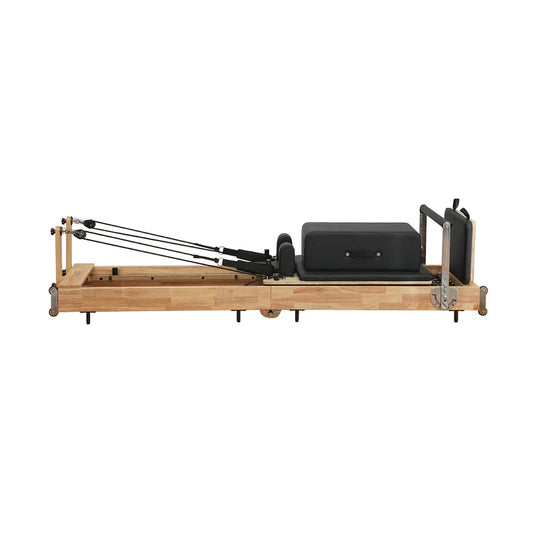
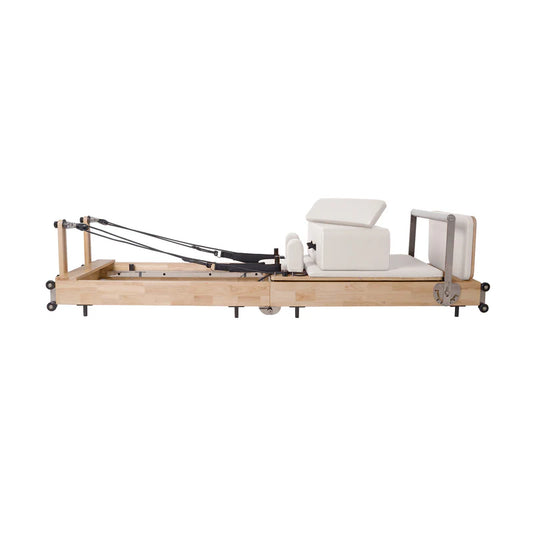
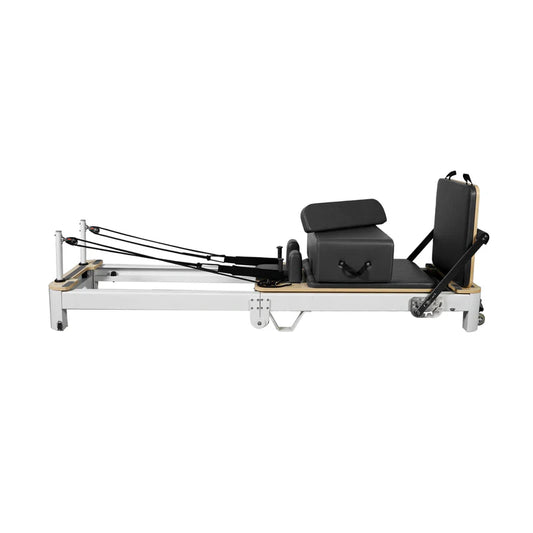
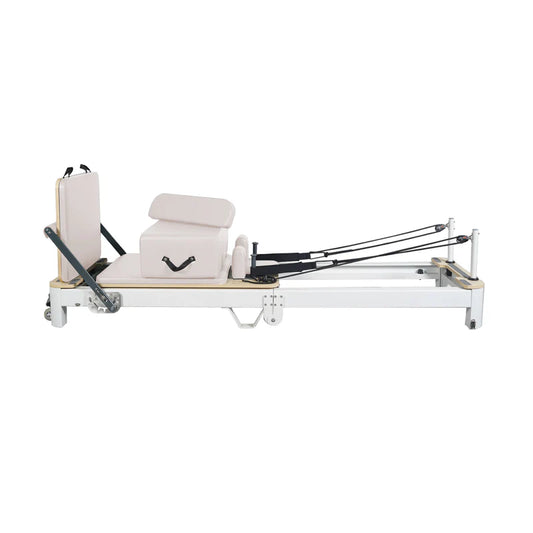
On the reformer, you lie on a carriage that slides along a long frame, with springs connecting it to the structure at one end, a footbar anchoring the feet, and adjustable straps for the hands or feet to pull against. Practitioners describe this as a closed-chain environment, where the limbs maintain contact with the machine throughout, the springs feed resistance back through the movement, and the body gets a running commentary on its own positioning. For a first-time Pilates student, that constant feedback has real value; the machine absorbs some of the instructional load that would otherwise fall entirely on the practitioner's own body awareness.
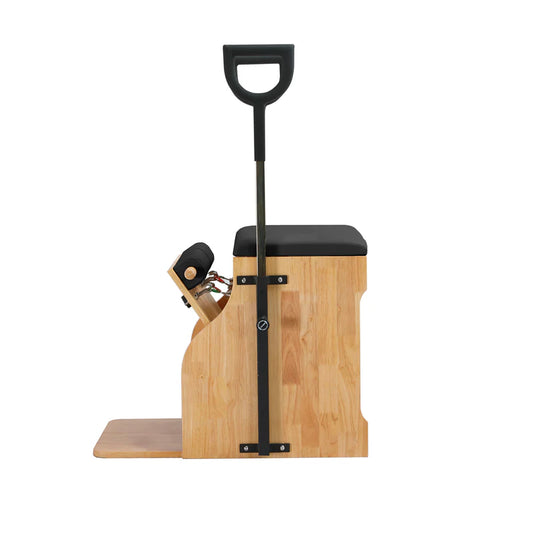
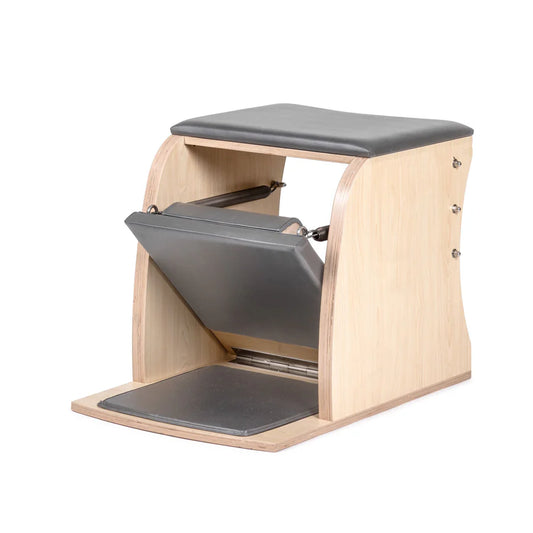
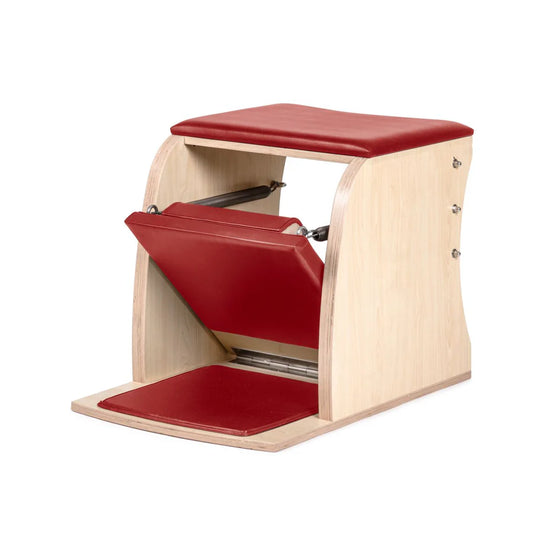
The chair uses an entirely different mechanism. In the front part of a small box of wood or metal, there is a pedal linked to springs, which are located under the box; pressing it will make the springs resist, and releasing it will make the springs go back. There is nothing to catch you; no carriage is holding your body in place, nor is there any strap to fix your arm. Understanding the Pilates chair vs reformer differences becomes clearest here: from your ankle joint all the way to your knee, hip, abdominal muscles, and to the shoulder joint, everything has to coordinate in order to handle that load while the machine does not provide any assistance. The single-leg press standing on the chair exerts more pressure on the stabiliser muscles than the reformer single-leg press done lying down, despite having the same amount of spring resistance.
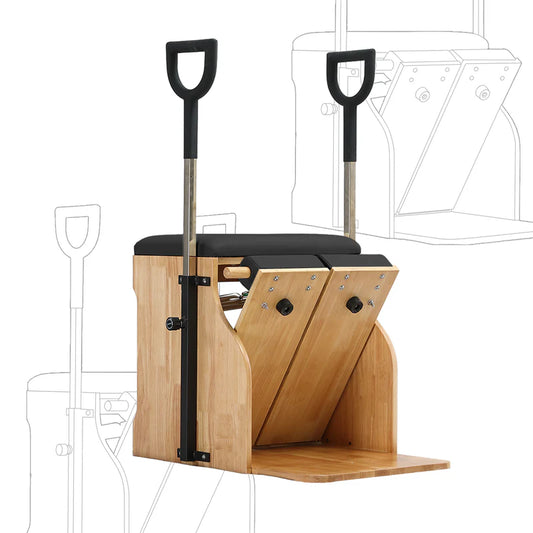
Some chairs have the split pedal system, wherein the two halves can move independently and each leg has to bear its own load.
The Space Reality That Sets Half This Debate
Most home buyers don't get as far as training philosophy before space intervenes and makes the decision for them. For anyone researching best Pilates equipment for home, this table is a useful starting point.
| Specification | Pilates Reformer | Pilates Wunda Chair |
| Length | 80–91 inches (approx. 203–231 cm) | Under 60 cm |
| Footprint | Approx. 2 feet wide plus clearance at each end | Under 0.3 square metres |
| Typical session duration | 45–60 minutes | 20–40 minutes |
| Exercise range | 500+ movements | 150+ variations |
| Intensity profile | Moderate to high, scalable | High, balance demands are constant |
| Beginner accessibility | High, carriage and straps provide support | Moderate; handles improve accessibility |
| Spring system | 4–5 adjustable springs | 2–4 springs with adjustable tension |
| Body positions used | Lying, sitting, kneeling, standing | Standing, seated, kneeling, prone |
A reformer claims floor space roughly equivalent to a single bed, and that's before accounting for the clearance you need at both ends to allow full carriage travel, plus the working room beside it for standing exercises. In a spare bedroom or a partitioned corner of a living room, that adds up quickly and the machine wins the argument before the training even begins. Anyone specifically looking at Pilates equipment for small spaces will find the chair resolves that problem entirely; the chair slides against a wall between sessions, takes nothing from the room when not in use, and is ready to train on within seconds of pulling it out. Joseph Pilates designed the original for clients in New York apartments who physically carried theirs out to summer houses; compact wasn't a concession, it was the brief from the beginning.
Where the Reformer Holds a Real Advantage?
The Pilates reformer vs chair comparison shifts considerably once you look at what the reformer was built to do across a full movement repertoire. The reformer was not designed to become the most popular Pilates machine by chance. The machine has a long structure that enables movements of the whole body through various planes, with movements including lying footwork, arm movements while sitting, kneeling movements, split moves while standing, and back extension when lying down. Five hundred or more exercise variations on a well-equipped reformer isn't marketing language; the range genuinely reaches every major muscle group.
Beginners find the reformer's structure significantly less intimidating than unassisted mat work. The springs respond rather than resist blindly; the carriage paces itself to what the muscles can actually produce; and the closed-chain design lets a newcomer feel correct engagement before their body awareness is developed enough to generate it on its own. The reformer appeals to rehab specialists exactly because of this. It provides an atmosphere where even weak muscles can move in a controlled fashion, which renders the equipment valuable to patients undergoing physical therapy or suffering from chronic joint issues.
Flexibility work sits more naturally on the reformer. Strap-assisted hamstring and hip stretches, long spinal articulation patterns that track the full length of the carriage, and rotation sequences through the chest and shoulders give it a depth of range that mat stretching rarely comes close to. Posture correction responds particularly well to the reformer's longer movement arc; the carriage travel coaxes the spine to articulate segment by segment rather than lurching through a block shift, which builds actual spinal mobility rather than the kind of short-lived relief that other methods produce. In households where the machine needs to serve more than one person, the reformer handles the range without friction; spring tension adjusts in seconds, the footbar shifts for different leg lengths, and two people at completely different fitness levels can use the same machine on the same morning without either of them compromising.
Reformer Pilates UK stocks a fully tested reformer range for UK home buyers, covering compact foldable models for smaller rooms through to full professional configurations. If you're looking for a Pilates chair for sale, they also offer free delivery to UK mainland addresses and a 12-month warranty on every machine.
Why Does the Chair Catch Every Serious Practitioner Off Guard?
In terms of Pilates equipment, the Wunda chair vs reformer question gets answered most honestly by the body itself after the first session. The Wunda Chair has always been known to be the hardest piece of equipment within the whole Pilates exercise program. That reputation has nothing to do with a complicated setup; it comes from what the body is required to manage on it. Movements feel disproportionately hard given how minimal the equipment looks, and that gap between appearance and effort is the design doing exactly what it was built to do. Without a carriage to provide structural context, and with a pedal surface small enough to demand constant balance management, every movement pulls on multiple systems at once and none of them gets to rest.
For lower body training, the chair produces something the reformer rarely reaches. Standing pedal work, step-down patterns, and pressing sequences position the body the way daily movement actually does, far more directly than anything performed lying down. Instructors use this gap deliberately; once a practitioner has genuinely mastered reformer footwork, which is essentially a supported squat executed horizontally, the chair version standing upright with spring feedback travelling through the foot is a progression that's harder in ways the reformer simply cannot replicate. Footballers, skiers, runners, and tennis and golf players tend to respond particularly well to the chair because it builds hip stability, ankle control, and single-leg strength in the exact positions those sports load the body.
Upper body work on the chair carries equal weight. Push-up variations using the handles rank among the most advanced exercises in the whole apparatus system, and the Kneeling Cat demands shoulder stability and deep abdominal control just to manage the pedal's return from an inverted position. None of this is first-month Pilates territory; it's what the chair has waiting for practitioners who've worked through everything the reformer's standard repertoire still challenges them with.
The Chair Exercises That Show Exactly What It's For
Looking at specific exercises gives a far clearer picture of what training on the chair actually feels like week to week. The Pilates chair benefits become most visible when you see which movement patterns it handles that other apparatus simply cannot replicate at the same intensity.
| Exercise | Primary Training Focus | What Makes It Distinctive on the Chair |
| Swan | Spinal extension, back opening | Pedal assists the backbend; split pedal adds spinal rotation |
| Mermaid | Lateral flexion, hip and knee mobility | Chair height allows a greater range than the floor-level Z-sit position |
| Kneeling Cat | Shoulder stability, abdominal control | Performed from an inverted position requiring constant balance |
| Standing Roll-Down (Hamstring 1) | Posterior chain, spinal articulation | Spring pushback through the pedal develops proprioceptive awareness |
| Teaser | Core endurance, balance, leg control | Arms positioned behind the body removes any leverage assistance |
| Triceps Press and Frog | Upper body strength, core stability | Seated floor position in front of the chair |
| Push Up 1, 2 and 3 | Full upper body and shoulder strength | Handle-based pressing is among the most demanding chair movements |
| Mountain Climber | Cardiovascular conditioning, core stability | The dynamic pedal-plank position engages legs and abdominals simultaneously |
Reformer Pilates UK stocks Wunda chair for home use and Pilates combo chair options for delivery within the UK, and they are all guaranteed for 12 months to perform as promised, just like the reformers that Reformer Pilates UK stocks.
Two Chair Formats: Finding the One That Fits Your Goals
There is no one type of Pilates chair for home, and the format that you use impacts the nature of your practice in meaningful ways.
The classical Pilates Wunda chair is a wooden or metal box frame with a padded seat, single or split pedal, and optional handles. It is the smallest format in the Pilates family and also the format that gives you the most straightforward option for getting your practice done while losing very little floor space. In the case of the split pedal, each side works on its own, revealing any left/right strength differences and bringing rotation into the presses.

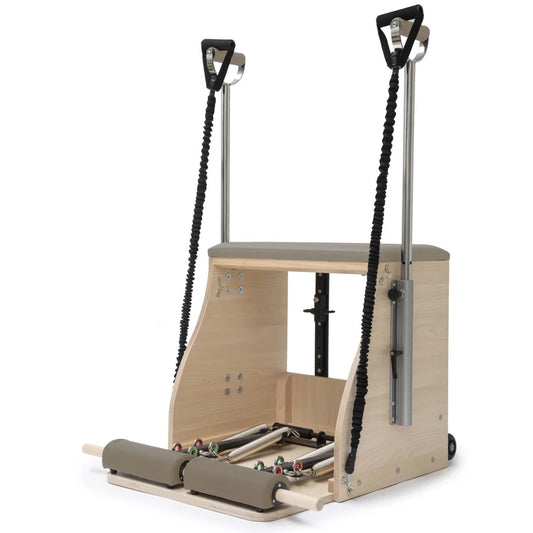
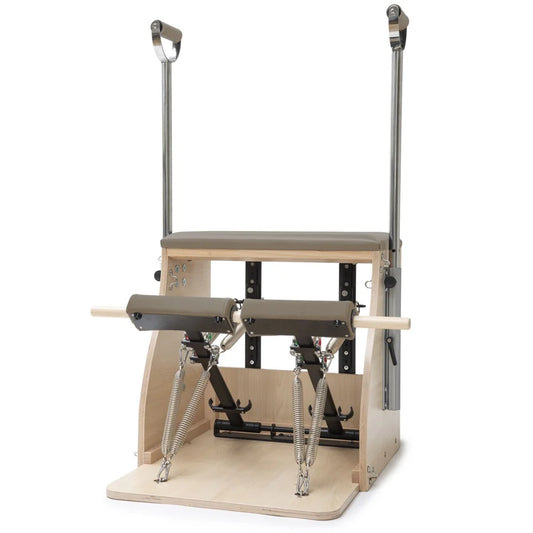
The Pilates chair vs reformer for home use question often lands here: the combo chair Pilates format brings fixed or removable handles to both sides of the frame, which widens what's available for standing and balance work, makes certain movements more manageable for anyone working around an injury, and at the same time unlocks the push-up and dipping variations that require a high level of upper body control to perform at all. For anyone who needs the chair to cover both rehabilitation work and progressive training, the Pilates combo chair format is the most adaptable single investment.
Making the Decision Between the Two
Space settles this for more buyers than any other factor. The Pilates chair vs reformer comparison comes down practically to this: if the available room can't comfortably hold an 80 to 91-inch machine with working clearance at both ends, the chair is the answer, and that's before any other consideration enters the conversation. Where space isn't an obstacle, the decision moves to the training purpose. Those exploring the Pilates chair vs reformer for beginners question will find the reformer's supported structure brings a level of forgiveness to early Pilates sessions that the chair doesn't offer; the broader exercise range, graduated resistance, and the carriage itself all make consistent progression easier from the very first session onwards. Anyone who struggles to get down to floor level due to dizziness, pregnancy, or joint problems will find the reformer's carriage height and horizontal positions far more workable than the floor-based starting positions that some chair exercises require.
For anyone with a working Pilates practice who wants sessions that build serious lower body strength, challenge balance without compromise, and concentrate that effort into 25 to 40 focused minutes, a Pilates machine for home doesn't get more efficient than the chair. Practitioners who own both pieces often reach for the chair more consistently, because it delivers more demand per square foot than anything else in the system and nothing it asks for can be performed passively. That absence of passive movement is what serious home practitioners keep coming back for. Reformer Pilates UK carries both reformers and Wunda Chairs, with every machine performance-tested and dispatched with free UK delivery; for anyone still working through the decision for Pilates Chair vs Reformer, their full range at http://reformerpilates.co.uk gives a clear side-by-side picture of what each piece of equipment actually occupies at home scale.
Frequently Asked Questions
Which Is Better for Beginners: A Pilates Chair or A Reformer?
Which Is Better for Beginners: A Pilates Chair or A Reformer?
The reformer is generally better for beginners because its carriage, springs, and straps provide support, making movements easier to learn while improving confidence and body awareness.
Is A Pilates Chair Suitable for Small Home Spaces?
Is A Pilates Chair Suitable for Small Home Spaces?
Yes. A Pilates chair has a compact footprint, can be stored against a wall after use, and is ideal for apartments or home gyms with limited space.
What Are the Main Benefits of A Pilates Chair
What Are the Main Benefits of A Pilates Chair
A Pilates chair improves balance, core stability, lower-body strength, and coordination. It also challenges stabilising muscles more intensely than many reformer exercises.
Who Should Choose a Pilates Reformer?
Who Should Choose a Pilates Reformer?
A reformer is ideal for beginners, rehabilitation, flexibility training, and households with multiple users, thanks to its wide exercise variety and easily adjustable resistance.
Can A Pilates Chair Replace a Reformer?
Can A Pilates Chair Replace a Reformer?
It depends on your goals. A chair is excellent for strength, balance, and space-saving home workouts, while a reformer offers greater exercise variety, support, and flexibility training.

Recent Posts


- Sale price
- £589.99
- Regular price
-
£989.99 - Regular price
- £589.99
- Unit price
- per
- Sale price
- £699.00
- Regular price
-
- Regular price
- £699.00
- Unit price
- per
- Sale price
- £525.00
- Regular price
-
- Regular price
- £525.00
- Unit price
- per


