


How Much Space Do You Need for an Oak Foldable Reformer Pilates Machine?
It might seem simple enough to buy a foldable Pilates reformer and make use of an unused corner in your house. However, if you do not have that much room, there is bad news for you. The actual reality is that the dimensions stated for the reformer only give you part of the picture. As soon as you begin exercising and stretching, getting off the carriage, and doing other exercises, the room will need to be a lot larger. Otherwise, your expensive reformer could end up spending a lot of time against the wall rather than being used. Find out about the dimensions you need before making a mistake.
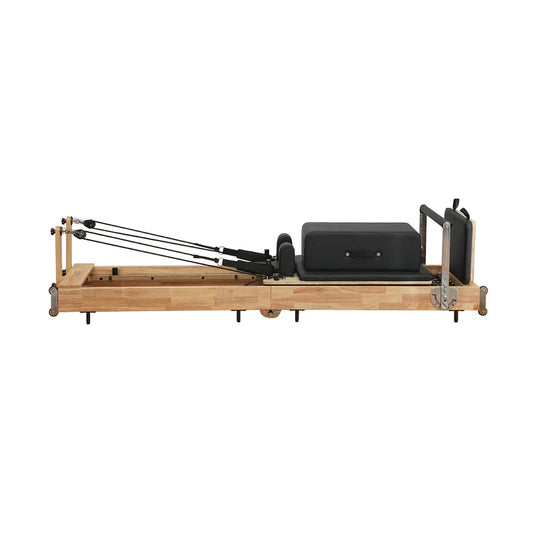
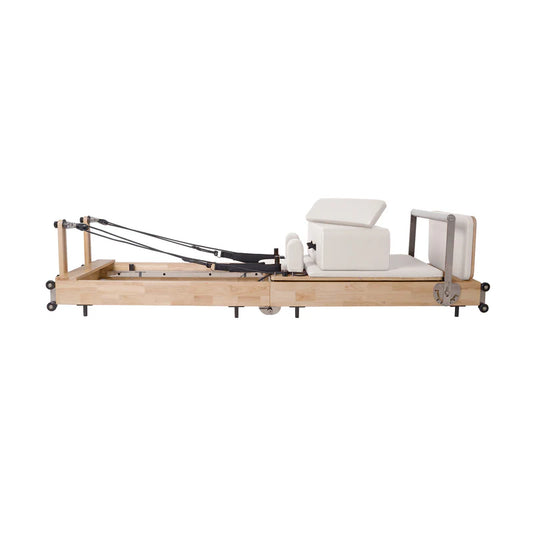
- Sale price
- £589.99
- Regular price
-
£989.99 - Regular price
- £589.99
- Unit price
- per
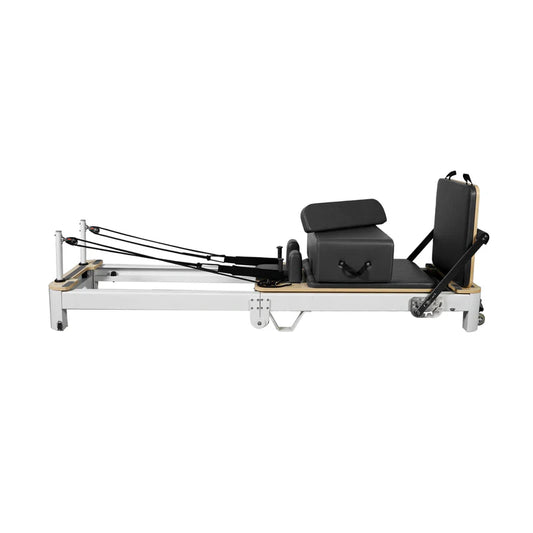
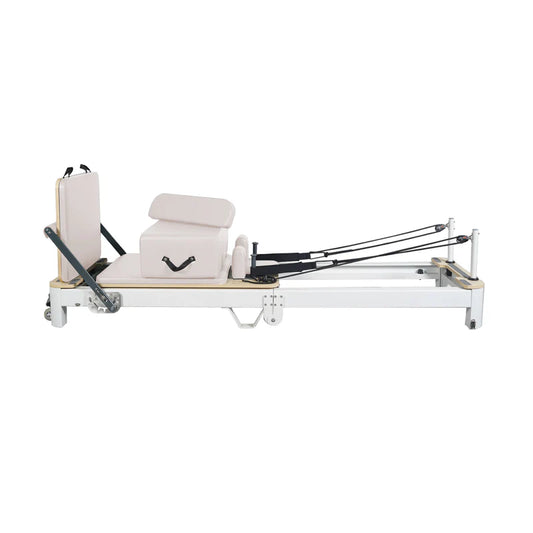
- Sale price
- £699.00
- Regular price
-
- Regular price
- £699.00
- Unit price
- per
- Sale price
- £639.99
- Regular price
-
- Regular price
- £639.99
- Unit price
- per
What the Machine Actually Measures?
The dimensions of the listing will let you know the size of the fold pilates machine; they will not, however, give you any information about the space requirements per session.
In the British market, the standard dimensions of the folding reformers made of solid oak are 230-250 cm by 61-70 cm, with the carriage being around 58-65 cm above the ground.
Here is how those reformer dimensions sit across the UK oak reformer market:
| Measurement | Typical Market Range | Reformer Pilates Oak Model |
| Length (unfolded) | 230–250 cm | 230 cm |
| Width (unfolded) | 61–70 cm | 69 cm |
| Height (unfolded) | 58–65 cm | 58 cm |
| Length (folded) | 120–135 cm | 122 cm |
| Width (folded) | 60–69 cm | 67.5 cm |
| Depth (folded) | 43–47 cm | 47 cm |
| Machine weight | 60–70 kg | ~65 kg |
These are the machine measurements only. The floor space a full workout demands is considerably larger, which is precisely where the next section starts.
The Real Floor Space You Need
Pilates is not a stationary activity. Arms extend past the head rail during rowing exercises; legs push out well beyond the footbar at full extension; stepping on and off the carriage sides happens throughout every session. Each of those movements reaches into the surrounding room. Ignore that clearance, and a user ends up training with their elbows brushing the wall, which is both unsafe and frustrating.
Getting Pilates reformer room size right and meeting genuine reformer space requirements comes down to three distinct clearance zones working together.
Side Clearance
Provide about 50 cm to 60 cm of clearance space on all sides of the equipment. The clearance provides for safe exit from the carriage, exercise with the legs sideways, and the execution of full arm circles. The minimum space required in small rooms is about 45 cm per side, but many exercises may get constrained at this clearance limit.
Head and Foot Clearance
Dedicate 60 cm to 90 cm at each end. The footbar end needs room for mid-session adjustment and jump board use, where 90 cm becomes the practical minimum. The head end requires clearance for seated rowing, box work, and full supine stretches where the body extends beyond the machine frame.
Ceiling Height
The minimum 2.3 metres for habitable rooms set under UK housing standards is sufficient for standard reformer training. For tower attachments or standing overhead spring work, 2.7 m becomes the comfortable threshold. Most UK homes clear this for everyday reformer use without any modification.
Combining all three zones gives a total recommended working area:
| Setup | Floor Area | Room Dimensions |
| Ideal | ~7 m² | 3.2 m × 2.2 m |
| Comfortable | ~6 m² | 3.0 m × 2.0 m |
| Minimum (functional) | ~5 m² | 2.8 m × 1.8 m |
To provide context for how this is mapped to UK households, the English Housing Survey of 2024-25 (MHCLG) states that the average UK double bedroom ranges from 10 m² to 14 m². The 6 m² workspace is well inside a cleared double bedroom without clearing out all the furniture.
The reformer clearance question, then, is rarely whether the home qualifies. It is which room to choose, and how to arrange it.
When the Session Ends, Where Does It Go?
A fixed reformer owns its footprint permanently. A foldable one gives the room back. That distinction is the entire argument for the format, but it only holds if the storage position is planned before the machine arrives, not after.
Standing Upright Against a Wall
The Reformer Pilates Oak model when standing upright measures 122 cm high, 67.5 cm wide, and 47 cm deep off the wall; smaller in size than an average UK armchair. The wheels built into the frame take care of its transportation needs so that tipping and moving it around happens in seconds without any need for a second helping hand. It is the most realistic way to store foldable reformers in bedrooms or living rooms where there will always be one open wall space.
Horizontal in a Closet or Deep Alcove
A utility cupboard or wardrobe alcove with at least 50 cm of internal depth works well. The weight of an oak reformer, between 60 kg and 70 kg, means firm flooring is essential and horizontal shelf storage above floor level is not practical alone.
Reformer Pilates, based in Manchester with free delivery to UK mainland addresses, engineered the oak model's hinge and wheel system specifically for this everyday storage cycle. The wheels carry the full weight of the oak foldable reformer pilates machine; the hinge locks it securely whether open for training or stood against a wall for storage, making the fold-and-store process straightforward from the very first session.
Reformer storage ideas that work across common UK home types:
- Hallway Alcove: Often the deepest unobstructed wall in a UK home, with solid flooring underneath.
- Bedroom Wall Behind The Door: The 47 cm depth clears most skirting projections and door architraves.
- Garage Or Dry Utility Room: Suits buyers with a separate workout space; oak finishes need a dry environment.
Matching the Machine to Your Room
Spare Bedroom
A standard UK double bedroom at 3 m × 3.5 m provides a clear 3 m × 2 m workout zone while keeping the bed in place. The machine stays open between sessions in a dedicated room, or folds to the wall when the room needs to serve as guest accommodation. For most UK buyers, this is the most comfortable home Pilates room setup available without any structural changes.
Studio Flat or Compact Apartment
The 2.8 m × 1.8 m minimum working area fits most UK studio flats once a coffee table is moved aside. Small room Pilates equipment decisions often come down to exactly this: a foldable oak reformer disappears when the session ends; a fixed-frame machine stays wherever it landed. The foldable format earns its price difference most obviously in this scenario.
Dedicated Home Studio or Garage Gym
Storage is not a factor because the folding reformer storage equipment is always kept open. Focus is drawn towards ceiling height (minimum 2.4m), a non-slip surface covering the concrete and mirrors for checking form. The difference between the commercial pilates reformer designed for studio efficiency and the home oak model lies in their specifications, which are different in a number of aspects, including the width of the carriage, the weight of the spring resistance and the frame.
Why Does the Oak Frame Change a Few Practical Details?
Material selection is not purely an aesthetics issue, as buyers who view materials only as decorations occasionally find themselves fooled by weight differences during storage.
- Weight: Oak reformers run 60 kg to 70 kg; aluminium equivalents come in at 45 kg to 55 kg. On transport wheels the gap barely registers. For stair moves or horizontal shelf storage, it is the deciding factor.
- Structural Stability: Solid oak resists lateral flex under high spring resistance better than thinner-gauge aluminium, which shows in carriage consistency at the top end of the spring range. That is the practical case for choosing a home pilates machine in hardwood over metal, beyond the finish.
- Room Integration: The pilates reformer UK market for oak models has grown because a wood frame reads as furniture in a living room or spare bedroom. An aluminium frame in the same setting reads as gym equipment. For dual-purpose rooms, that distinction matters.
- Durable Finish: The scratch-resistant oak finish turns out to be durable even more than the upholstered portion in the same machine; hence, the frame remains attractive long after the upholstery wears out.

Five Measurements to Take Before Ordering
- Working Length: Measure 3.0 m of unobstructed floor. Doors swinging inward, radiator brackets, and the feet of existing furniture all reduce this figure; measure with everything in its normal position.
- Working Width: 2.0 m minimum, side clearances included. This is wider than most buyers anticipate, and eye measurement consistently underestimates it.
- Storage Wall: Find out which wall the device will be placed against when it is folded. This wall must have a minimum clear width of 67 cm to 70 cm and 47 cm to 50 cm of depth.
- Height Of The Ceiling In The Middle: The ceiling height may be low on the border of converted loft and attic rooms, but clear in the middle of the room where the carriage will be placed.
- Floor Surface: Oak reformers perform well on hardwood, laminate, and carpet. On smooth hard flooring, non-slip rubber pads under the machine's feet prevent movement under spring load and protect the floor from marking.
For buyers working across price points, Reformer Pilates stocks a full range of home reformers under £600 alongside the premium oak foldable reformer Pilates machine, each backed by a 12-month manufacturer's warranty and free UK mainland delivery. Starting at a lower price point and stepping up later without switching suppliers is a practical path that the range is built to support.
Frequently Asked Questions
What Is The Minimum Room Size For An Oak Foldable Reformer Pilates Machine?
What Is The Minimum Room Size For An Oak Foldable Reformer Pilates Machine?
An oak foldable reformer Pilates machine needs a functional minimum of 2.8 m × 1.8 m. For comfortable training across the machine's full movement range, 3.0 m × 2.0 m is the practical target.
Can I Use One In A Small UK Flat?
Can I Use One In A Small UK Flat?
Indeed, on the condition that 2.8 m of clear floor length can be accommodated during the lesson. Folded, the machine takes up only 122 cm height, 67.5 cm width, and 47 cm depth; more compactly stored than most sofas.
Do I Need A Higher Ceiling Than Standard?
Do I Need A Higher Ceiling Than Standard?
Standard UK ceiling heights of 2.3 m to 2.4 m cover all regular reformer exercises. Tower attachments and standing overhead spring work benefit from 2.7 m, but most UK rooms need no modification for everyday use.
How Heavy Is An Oak Reformer, and Can One Person Move It?
How Heavy Is An Oak Reformer, and Can One Person Move It?
From 60 kg to 70 kg. Transport wheels built into the machine enable one person to manoeuvre and store it by himself. Foldable reformer storage on horizontal shelves above floor level requires two people.
What Separates A Home Oak Reformer From A Commercial Machine?
What Separates A Home Oak Reformer From A Commercial Machine?
A commercial reformer carries a wider carriage, heavier spring specification, and a frame built for multiple users across many daily sessions. A home Oak model is built for personal use, with a foldable design and a 200 kg user weight rating. They are not interchangeable; the home format is purpose-built for exactly this kind of domestic setup.

Recent Posts


- Sale price
- £589.99
- Regular price
-
£989.99 - Regular price
- £589.99
- Unit price
- per
- Sale price
- £699.00
- Regular price
-
- Regular price
- £699.00
- Unit price
- per
- Sale price
- £525.00
- Regular price
-
- Regular price
- £525.00
- Unit price
- per


