

What Muscles Do Reformer Pilates Work?
Reformer Pilates is referred to as a whole-body exercise since it targets several muscle groups simultaneously, instead of just one. The spring resistance, controlled movement and balance work will constantly be challenging the body to stabilise and support itself during each exercise. But although Pilates exercise is primarily associated with core training, exercise on the reformer also works the legs, glutes, back, arms and postural muscles.
- Sale price
- £525.00
- Regular price
-
- Regular price
- £525.00
- Unit price
- per
- Sale price
- £525.00
- Regular price
-
- Regular price
- £525.00
- Unit price
- per
The Core
The core is always working during reformer Pilates, even when the exercise is focused on the arms or legs. The moving carriage demands constant stabilisation from the deep abdominal muscles particularly the transverse abdominis as well as the pelvic floor and the muscles along the spine. Over time, this builds the kind of deep, functional core strength that transfers directly to everyday life and supports long-term back health.
Legs and Glutes
Footwork series, squats, and leg press variations on the reformer target the quadriceps, hamstrings, calves, and glutes. Because the spring resistance works against your movement in both directions, the muscles are challenged concentrically (during the push) and eccentrically (on the return), producing a thorough lower-body workout without the impact associated with running or traditional strength training.
Back and Postural Muscles
Exercises involving the straps and pulling movements develop strength in the upper and mid-back the rhomboids, trapezius, and latissimus dorsi. These are the muscles most responsible for posture. People who sit at desks for long hours often find that reformer Pilates significantly reduces tension in the neck, shoulders, and upper back after just a few weeks of practice.
Arms and Shoulders
The strap-based pulling exercises and push-through movements also engage the biceps, triceps, and shoulder stabilisers. While reformer Pilates won't build the bulk of heavy weightlifting, it develops lean, functional arm and shoulder strength that supports mobility and injury prevention.
Full-Body Muscle Engagement
The great thing about reformer exercises is that muscles aren't exercising alone. For the majority of exercises, the body needs to simultaneously stabilise, balance and control movement. This will cause greater activation of the muscle and promote between muscle group coordination. Resistance is also in the spring, allowing the muscles to be engaged during the push and return portion of the movement, which can help to improve muscular endurance in addition to strength.
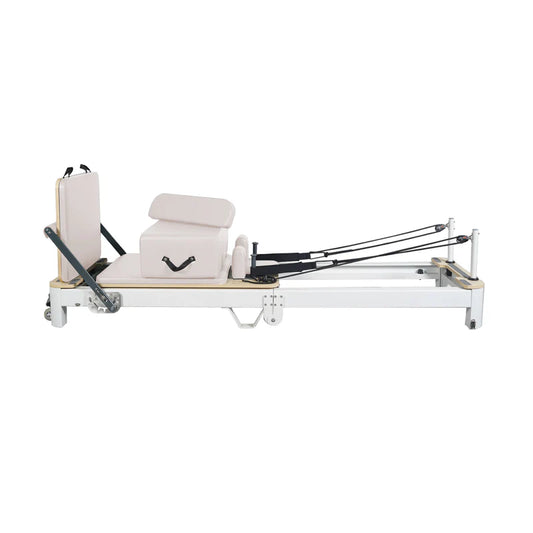
Reformer Pilates differs from conventional gym training programmes, which tend to involve repetitive exercises or weight lifting. The resistance is smoother and more fluid, making the muscles produce continuous movement without the abruptness associated with certain types of workouts. This balanced approach is one reason why demand for Reformer Pilates Machine For Sale options continues to grow among home users, studios, and rehabilitation spaces alike, as more people turn to reformer training for fitness, recovery, and long-term strength development.

Recent Posts


- Sale price
- £749.99
- Regular price
-
£989.99 - Regular price
- £749.99
- Unit price
- per
- Sale price
- £899.00
- Regular price
-
- Regular price
- £899.00
- Unit price
- per
- Sale price
- £525.00
- Regular price
-
- Regular price
- £525.00
- Unit price
- per


